출처:NASA
How a Planet Left Our Solar SystemPaul M. SutterSometimes you just know. Something clicks, you have a realization that this relationship isn’t right, and it’s simply time to go.
Itcanhappentoanyone, atanytime, eventoplanets, andevenbillionsofyearsago.PaulM.Sutter를 가끔 알고 있을 때도 있습니다. 파샤 늘씬한 순간 이 관계가 옳지 않다는 것을 알고 이제 가야 할 때입니다.
그것은 누구도 언제든지, 게다가 행성에서도 수십 억년 전에 일어날 것입니다.
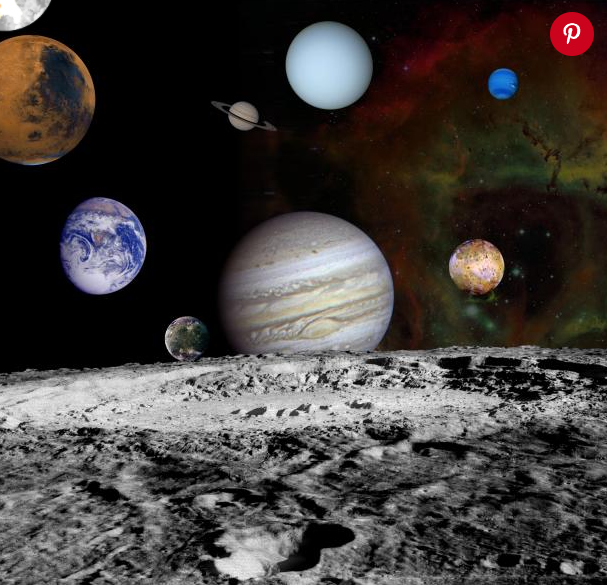
The solar system we have today isn’t the solar system we’ve had the whole time. Today, we have four rocky inner worlds (Mercury, Venus, Earth, and Mars), an asteroid belt, four gassy outer worlds (Jupiter, Saturn, Uranus, and Neptune), and then a ring of icy leftovers.
When astronomers use mathematical models to simulate the formation of our solar system, they find something interesting: the outer planets were once much, much farther away from the Sun. That’s because our Sun is so dang hot; its intense heat melts any ices and blows away any loose gasses in the inner regions of the solar system.
PaulM.Sutter오늘 우리가 가진 태양계는 우리가 지금까지 해온 태양계가 아닙니다. 오늘 우리는 4개의 암석 내적 세계(수성 금성 지구 화성), 소행성대, 4개 가스 외적 세계(목성 토성 천왕성 해왕성), 그리고 얼음으로 뒤덮인 고리를 가지고 있습니다.
천문학자들은 태양계의 형성을 시뮬레이션하기 위해서 수학적 모형을 사용할 때 흥미로운 것을 발견한다:외행성이 한때는 태양으로부터 훨씬 멀리 있었습니다. 그것은 우리의 태양이 너무 뜨거우니까요. 그 강렬한 열은 얼음을 녹이는 태양계 내부의 느슨한 가스를 날리어 버립니다.
If you’re trying to build a giant planet, you need lots and lots of ices and gasses, like hydrogen and helium. And there just isn’t that much of the stuff near the Sun, especially in its early days when it was much more temperamental than it is today.
So the giant planets need to form further out, where there’s a rich supply of materials that they can use to bulk up and get huge.
Now we have an interesting problem: how do the giant planets then migrate into their current positions?
Oneoptionisthroughacomplicateddanceinvolvingthestill-formingplanetsandtherichsuppliesofgassurroundingthemintheyoungsystem.Throughvariousinteractions, thegascanslowlytugattheplanets, pullingthemclosertothecourseofafewmillionyears.PaulM.Sutter, 만약 수소와 얼음 같은 행성과 얼음 같은 행성을 그리고 특히 오늘보다 훨씬 변덕이었다 초기에는 태양 근처에는 많은 물질이 존재하지 않습니다.
그래서 거대한 행성은 더 멀어 형성되지 않으면 안 됩니다. 거기에서 물질이 다량으로 공급되고 부피가 커지는 거대화하는 일이 있습니다.
지금 우리는 흥미로운 문제를 가지고 있습니다:거대 행성은 어떻게 그들의 위치로 이동합니까?
하나의 방법은 아직 형성되어 있는 행성과 그것들을 둘러싼 풍부한 가스 공급을 포함하는 복잡한 춤을 춤입니다. 다양한 상호 작용을 통해서 가스는 행성을 천천히 되돌릴 수 있고 수백만년 동안 행성을 태양의 근처에 끌어들일 수 있습니다.
Another, much more fun, possibility involves a fifth giant planet.
At first, this world would form just like its siblings, suckling on tremendous reserves of gas, plumping up to become a giant in its own right. But there isn’t enough room in the outer system for that many planets. They would tend to swing close together or have their orbits align too many times.
Eventually, afterahundredthousandyearsorso, thingswouldgohaywire.Theplanetwouldbecomeunstable, itsorbitvaryingradically.Eventually, itwouldgetejectedoutofthesolarsystemaltogether.PaulM.Sutter외의 더 재미 있는 가능성은 5번째의 거대한 행성을 포함합니다.
처음에는 이 세계는 거대한 가스 매장량을 빨아들였고, 그 자체로 거인이 되기 위해서 뛰어오르는 형제와 같이 형성됩니다. 그러나 그렇게 많은 행성을 위한 공간이 외부 시스템에 충분하지 않아요. 그들은 서로 가까이에서 스윙하거나 궤도를 정렬한 게 경향이 있습니다.
결국 10만년 정도 지나면 일이 엉망이 되겠죠. 행성은 불안정해질 궤도는 급격히 변할 겁니다. 결국 그것은 외계에 모두 방출됩니다.
As for the remaining planets? Well, heaving a giant world out of the solar system requires a fair amount of energy, and somebody has to pay the price. The remaining planets, losing energy, would be forced to migrate closer to the Sun into their present-day positions.
But what about the fifth planet? It would be forced to roam the interstellar depths as a rogue planet for the rest of the days. It would be alone… but at least it would be free. Paul M. Sutter 나머지 행성은? 태양계 밖으로 거대한 세계를 끌어올리는 것은 상당한 양의 에너지를 필요로 하고 누군가는 그 대가를 치러야 합니다. 에너지를 잃은 나머지 행성들은 현재 위치로 태양 근처로 이동해야 할 것입니다.
하지만 다섯 번째 행성은 어떨까요? 그것은 남은 기간 동안 불량 행성에서 성간 안쪽을 돌아다닐 수밖에 없을 것입니다. 그건 혼자죠… 하지만 적어도 자유죠.